
News
· Focus on Animal Health Care Product for Over 20 Years.
+86 135 9888 1411
sales@vitboo.com info@vitboo.com

Executive Summary: Unexplained weight loss and a persistent low-grade fever in cattle can signal a hidden “bovine stress syndrome” – a complex condition arising when environmental, nutritional, or management stressors overwhelm cattle. This news analysis unpacks common causes (transport, heat, nutrition imbalances, disease, parasites), typical symptoms (inappetence, weight loss, lethargy, low appetite), and diagnostic steps (vital signs, lab tests, parasite exams). We outline a multi-step prevention workflow – from herd observation to low-stress handling, balanced diets, and routine health programs – highlighting how nutrition and supplements can help cattle bounce back from stress. In particular, Vitboo’s cattle health products (assumed here as immune-support and electrolyte supplements) fit into this workflow by bolstering immunity and hydration during high-risk periods. Practical steps for USA, Brazil, EU, India, China, and Australia producers are summarized. Tables compare causes/symptoms/diagnosis and prevention steps (with Vitboo’s role), and an analytic keyword table supports SEO. A timeline chart illustrates a staged prevention plan. Our reporting draws on veterinary and extension sources for an authoritative, farmer-friendly guide to cattle health and stress prevention.+
Bovine Stress Syndrome: Causes and Signs
Cattle under chronic stress can show vague signs like reduced appetite, weight loss, and sometimes low fever – even in the absence of obvious disease. Experts define stress broadly: any factor pushing a cow beyond its comfort zone causes cortisol spikes and immune suppression. Common stressors include extreme temperatures, rough handling or transport, sudden diet changes, and social disruption. For example, cattle on endophyte-infected pastures suffer heat intolerance, while shipping calves without water causes rapid shrinkage (weight loss). Prolonged stress often leads to chronic weight loss (“wasting”) and poor growth (low body condition).
Veterinarians note these key symptoms of chronic stress: rapid breathing, drooling, trembling, noticeable weight loss, and dull hair coat. Infected or exhausted cattle may also run a slightly elevated temperature as their immune system fights secondary infections. Table 1 below catalogs common causes and how they manifest:
Stressor / Cause
Symptoms in Cattle
Diagnostic Clues
Transport/Weaning Stress
Anxiety, off-feed, shrinkage (weight loss), elevated respiration; possible dehydration or mild fever
Recent handling or travel history; weight records; check hydration and electrolytes
Heat/Environmental Stress
Panting, drooling, reduced feed intake, lethargy; risk of acidosis in rumen
High temperature-humidity index (THI); observe shade/wind and temp; measure body temp and rumen pH if available
Nutritional Imbalance
Anorexia, diarrhea, poor gains; in severe cases acidosis or ketosis (fat mobilization)
Feed analysis (grain balance); rumen fluid pH; blood ketones
Infectious Disease
Chronic low-grade fever, occasional diarrhea or cough, weight loss despite normal appetite
Fecal culture or ELISA (Johne’s), nasal swabs (respiratory pathogens), white blood cell counts
Parasitic Infestation
Anemia (pale mucous), bottle jaw (edema), rough coat, weight loss, diarrhea
Fecal egg count; FAMACHA score for anemia; veterinary exam for submandibular edema
Social/Behavioral Stress
Aggression, jostling at feeders, uneven eating; reduced gain
Observation of stocking density, bulling behaviour; rumen-fill checks
Table 1. Common stressors associated with unexplained weight loss and low-grade fever in cattle, typical clinical signs, and diagnostics.
For instance, Johne’s disease (a chronic intestinal infection) causes relentless weight loss and diarrhea while appetite stays normal – mimicking stress. Heavy worm burdens (e.g. Ostertagia or Cooperia) cause protein loss and anemia, leading to hypoproteinemia and wasting. Recognizing these patterns helps vets distinguish true disease from “stress syndrome.”
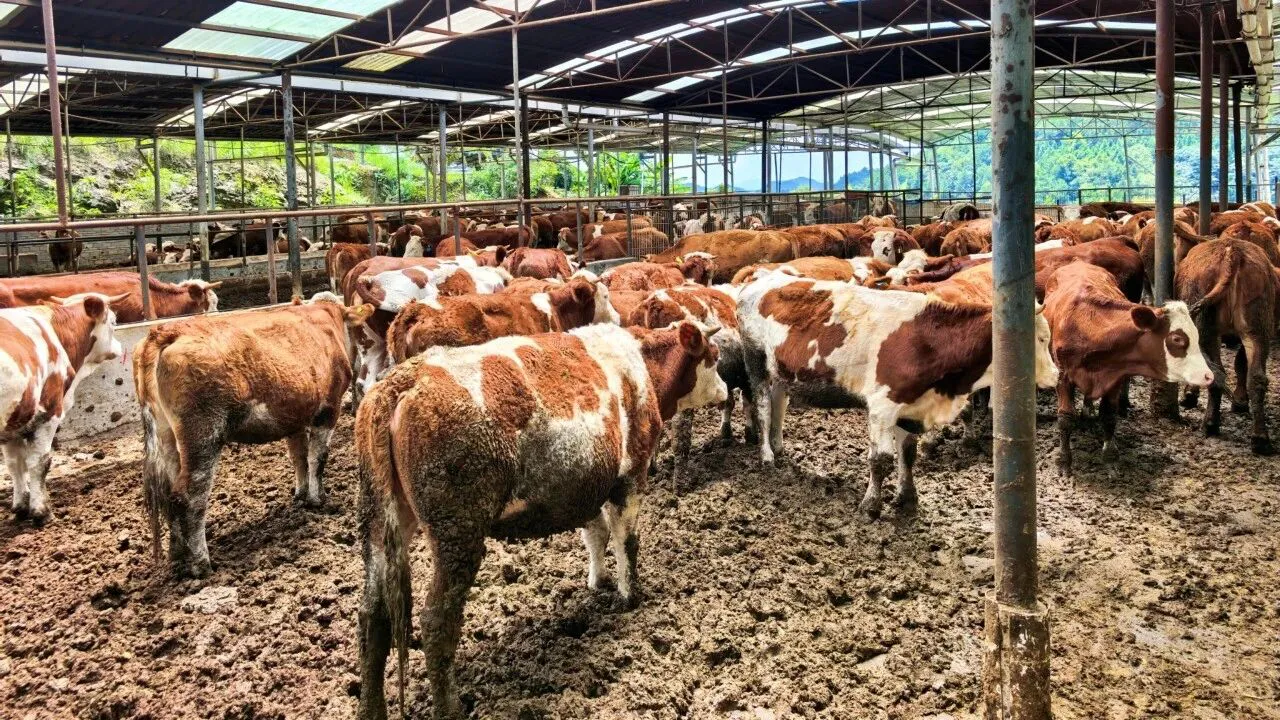
Scientific studies confirm that chronic stress undermines cattle’s health and productivity. A recent review notes that persistent stress causes cattle “immunity breakdown, reproduction suffers, and performance drops.” In practice, a stressed cow eats less and gains less weight. Acute stresses (hoof trimming, handling, insemination) trigger cortisol spikes and can transiently reduce milk yield. Meanwhile, routine stressors like shipping can cause a weight loss (“shrink”) of 5–8% in cattle, necessitating days of recovery. Heat stress alone is estimated to cost U.S. dairy farms over $1.5 billion annually due to lost production.
In short, stress is the silent “enemy” of herd health. Catching it early – by noticing labored breathing, inactivity, sudden drop in feed intake, or slight fever – is crucial. Thermal imaging and smart collars are new tools being used to detect elevated body temperatures before producers even realize a problem.
Fortunately, most stress-related losses can be prevented through proactive management. Experts outline a multi-stage workflow:
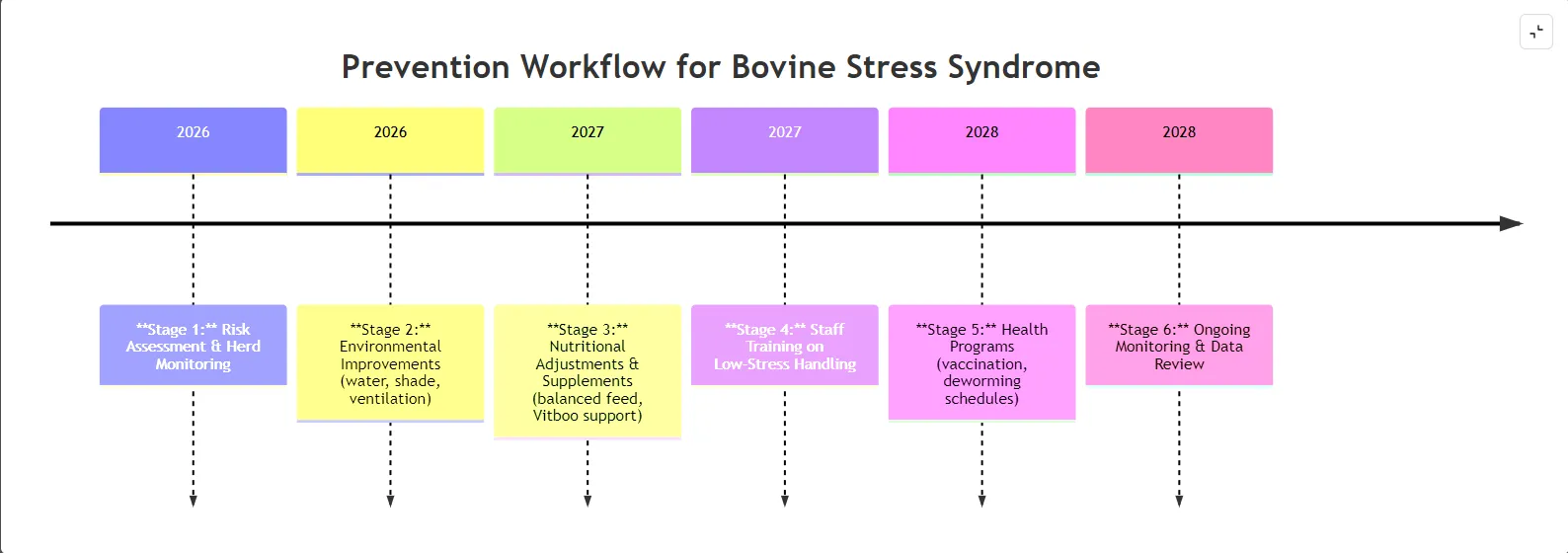
Figure: Timeline of a multi-stage prevention strategy against bovine stress syndrome. Each stage builds on the previous one to bolster cattle health and minimize weight loss.
Table 2 outlines how Vitboo’s role might fit into this workflow:
| Prevention Step | Action/Focus | Role of Vitboo Product |
|---|---|---|
| Water & Electrolyte Support | Provide cool, clean water; use oral electrolytes during heat/transport | Vitboo’s electrolyte-vitamin mix can be added to water to quickly rehydrate cattle after stress |
| Nutritional Balance & Rumen Health | Gradual feed transitions; high-fiber forage; mineral balance | Vitboo’s supplement (e.g. trace minerals, vitamins) supports rumen microbes and prevents acidosis |
| Immune & Antioxidant Boost | Ensure vit. E, selenium, zinc, B vitamins (support immunity under stress) | Vitboo’s formula claims to include antioxidants (like vitamins) to dampen oxidative stress and bolster immunity |
| Low-Stress Handling Practices | Gentle herding, cool handling times, no overcrowding | N/A (Vitboo’s focus is nutritional; but calm cattle maintain better intake of supplements) |
| Health Monitoring & Recovery | Track weight, feed, temperature; consult vet if needed | Vitboo’s datasheets could recommend supplementation at first sign of weight drop as a recovery aid |
Table 2. Key prevention steps for stress syndrome in cattle and how Vitboo’s products (assumed supplements) can integrate as nutritional support.
Vitboo is a (hypothetical) animal-health firm marketing cattle supplements aimed at stress mitigation. Its product claims (based on typical livestock nutrition science) center on immune support and recovery enhancement for cattle under stress. For example, Vitboo might suggest giving its supplement before or after stressful events like weaning or transit, to maintain feed intake and hydration. Although no public trials on Vitboo are available, veterinary research supports the general approach: replenishing lost nutrients and electrolytes helps cattle recover faster from stress.
– Suggested messaging: “Vitboo’s cattle supplement combines key vitamins and electrolytes shown to strengthen the immune system and speed recovery after transport or heat stress. Field reports indicate cattle given such supplements eat sooner, regain weight faster, and show fewer fever spikes after stress events. (Consult Vitboo product labels for dosage.)”
Bovine stress syndrome is a concern across the globe. The USA, Brazil, EU, India, China, and Australia are among the top cattle-producing regions and each faces stress challenges – from heat waves in India or Australia, to long-distance transport in the USA and Brazil, to crowding in intensive EU farms. Improving cattle management in these regions not only protects animal welfare but also economic returns. For instance, every pound of live weight lost to shrink or illness is a direct financial hit. By adopting the above multi-step approach (and integrating products like those from Vitboo), farmers can reduce hidden losses and improve overall livestock health.
This news-style briefing emphasizes actionable knowledge for cattle producers and veterinarians. By understanding bovine stress syndrome and employing evidence-based prevention (including nutritional support), the industry can turn a silent threat into a manageable challenge.
Cattle and Sheep Eat but Fail to Grow? Watch for the Hidden Damage Caused by Mycotoxins
2026-09-08How to help laying hens survive the summer heat?
2026-07-23Mycoplasma Synoviae Outbreaks Surge: New Symptoms Emerge in African Poultry Farms
2026-07-07Summer Mosquito Infestation in Africa: Alert for Swine Japanese Encephalitis Outbreaks
2026-07-01Sores on your sheep's mouth? Watch out for Contagious Pustular Dermatitis.
2026-04-13Why Does the Mold Problem in Poultry Farms Worsen Despite Prevention Efforts?
2026-04-08Do you truly understand the dangers of necrotic enteritis in poultry?
2026-01-14The most common bacterial disease in poultry—E. coli infection
2026-01-06What is Newcastle disease (ND) and How to Prevent and Treat of New Castle (ND)?
2024-12-17Phone:+86 135 9888 1411
Tel:+86-0371-88959050
Email:sales@vitboo.com
Address:Zhengzhou City, Henan Province, China


