News
· Focus on Animal Health Care Product for Over 20 Years.
+86 135 9888 1411
sales@vitboo.com info@vitboo.com

1.How to Quickly Determine if the Disease is E. coli
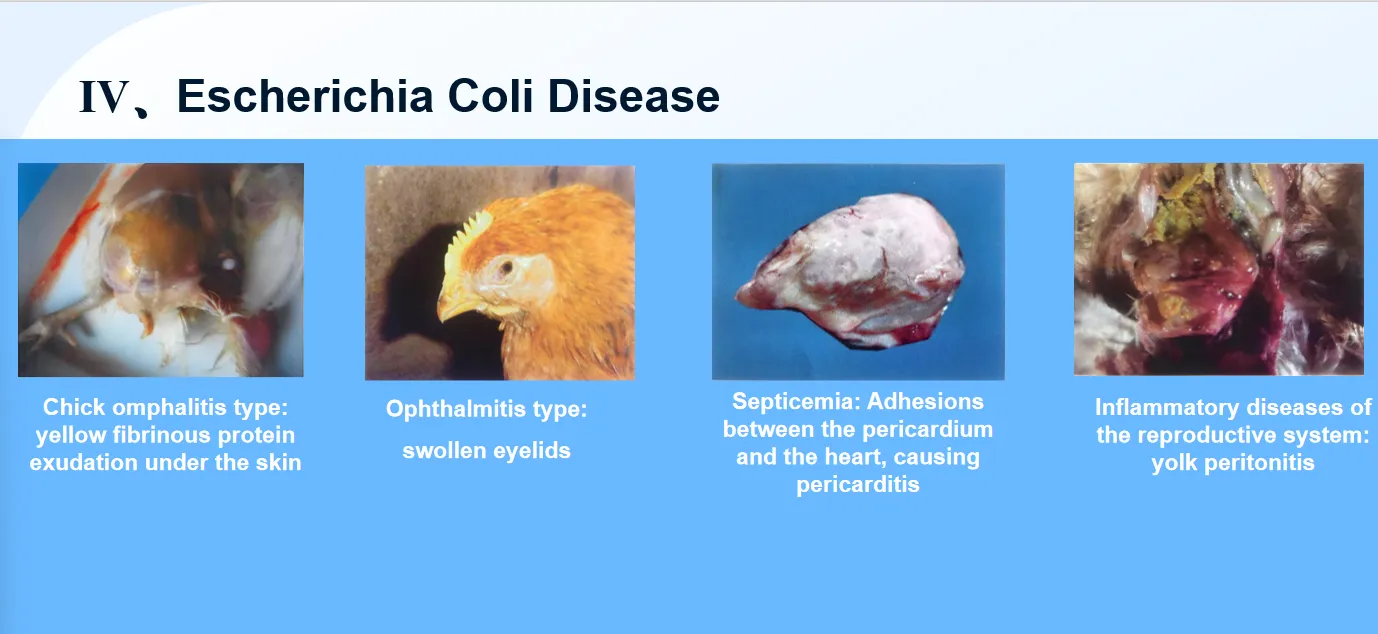
Respiratory symptoms: cough, dyspnea (e.g., air sac inflammation).
Fibrinous exudate: pericarditis, perihepatitis, and air sacculitis (typical "three inflammations" lesions).
Yolk peritonitis: There is rotten yolk or cheesy material in the abdominal cavity of laying hens.
2.E. coli prevention program
Feeding management and environmental hygiene
Environmental Control:
Temperature and Humidity: Maintain a stable house temperature (33-35°C for chicks, 18-22°C for mature chickens) and a humidity level of 60-70% to avoid cold stress and ammonia accumulation.
Ventilation: Enhance ventilation to reduce ammonia concentrations (<15 ppm) and dust, thereby minimizing the risk of respiratory infections.
Bedding Management: Change bedding regularly and keep it dry to prevent fecal accumulation and bacterial growth.
Sanitation and Disinfection: Daily Disinfection: Spray the house 2-3 times weekly with iodine, potassium persulfate, or a quaternary ammonium salt disinfectant.
Empty House Disinfection:
After all chickens are fully in and out, thoroughly clean the house and disinfect with formalin fumigation or flame disinfection.
Biosafety measures
Isolation and Quarantine:
Newly introduced chickens must be isolated and observed for two weeks, and only re-integrated after being confirmed disease-free.
Entry of outsiders and vehicles should be restricted, and staff should change into disinfected shoes and clothing.
Water and feed hygiene:
Use clean drinking water and regularly clean water lines (sodium hypochlorite can be added for disinfection).
Prevent mold from forming in feed (add a mold remover such as montmorillonite) to prevent mycotoxins from compromising immunity
Biosafety measures
Vaccination: Inactivated vaccines: Target common serotypes (e.g., O1, O2, and O78). Breeder chickens should be vaccinated twice before laying (3-4 weeks apart).
Probiotics: Bacillus subtilis and lactic acid bacteria should be added long-term to competitively inhibit Escherichia coli colonization.
Monitoring and early intervention
Regular testing:
Monthly fecal or diseased material sampling (PCR or bacterial culture) to monitor strain changes.
Homemade vaccines: If a specific serotype is prevalent on the farm, a homegrown inactivated vaccine can be prepared.
Pharmacological prevention: Antibiotics: Enrofloxacin, amoxicillin, or other antibiotics should be added for a short period of time during susceptible stages (e.g., chicks 1 week old, before and after flock transfer). Rotational use is recommended to prevent drug resistance.
Illness treatment:
Immediately isolate sick chickens and administer sensitive medications to the entire flock (based on susceptibility testing).
Enhance environmental disinfection (daily) and dispose of dead chickens in a safe and secure manner.
 E. coli prevention program
Homemade vaccines: If a specific serotype is prevalent on the farm, a homegrown inactivated vaccine can be prepared.
Pharmacological prevention: Antibiotics: Enrofloxacin, amoxicillin, or other antibiotics should be added for a short period of time during susceptible stages (e.g., chicks 1 week old, before and after flock transfer). Rotational use is recommended to prevent drug resistance.
Probiotics: Bacillus subtilis and lactic acid bacteria should be added long-term to competitively inhibit Escherichia coli colonization.
Monitoring and early intervention
Regular testing: Monthly fecal or diseased material sampling (PCR or bacterial culture) to monitor strain changes.
Monitor antibiotic susceptibility to guide clinical medication use.
Illness treatment: Immediately isolate sick chickens and administer sensitive medications to the entire flock (based on susceptibility testing).
Enhance environmental disinfection (daily) and dispose of dead chickens in a safe and secure manner.

Understanding Bovine Stress Syndrome in Cattle Herds
2026-09-22Cattle and Sheep Eat but Fail to Grow? Watch for the Hidden Damage Caused by Mycotoxins
2026-09-08How to help laying hens survive the summer heat?
2026-07-23Mycoplasma Synoviae Outbreaks Surge: New Symptoms Emerge in African Poultry Farms
2026-07-07Summer Mosquito Infestation in Africa: Alert for Swine Japanese Encephalitis Outbreaks
2026-07-01Sores on your sheep's mouth? Watch out for Contagious Pustular Dermatitis.
2026-04-13Why Does the Mold Problem in Poultry Farms Worsen Despite Prevention Efforts?
2026-04-08Do you truly understand the dangers of necrotic enteritis in poultry?
2026-01-14What is Newcastle disease (ND) and How to Prevent and Treat of New Castle (ND)?
2024-12-17Phone:+86 135 9888 1411
Tel:+86-0371-88959050
Email:sales@vitboo.com
Address:Zhengzhou City, Henan Province, China